|
Welcome back to this week in ACPC, there
TADs TADs TADs.
They're the talk of the town—or at least the policy wonk corner of it I live in.
Last week, Mayor Andre Dickens unveiled his second crack at the nut for funding his $5.5 billion Neighborhood Reinvestment Initiative plan. On Tuesday, the City Council held its first—and likely only—public hearing on the NRI. To fund the plan, Dickens has proposed to extend the lifespan of six of the city's tax allocation districts through 2056. The original plan introduced last year included all eight TADs. The updated plan removed the Beltline and Perry-Bolton. Invest Atlanta CFO Nino Chiappetta says the proposed extension would raise $7.7 billion in TAD funding.
Tuesday's public hearing during the Community Development and Human Services Committee meeting took the better part of seven hours, with a couple hours of public comment almost evenly split between supporters and opponents. I covered the meeting live on Bluesky.
At the end of the marathon meeting—and at the mayor's request—the CDHS committee voted to hold the legislation for a cycle.
With the FY27 budget scheduled for a vote on June 1, debate around the NRI package should have some more room to breathe.
Still, four weeks to consider an allegedly $7.7 billion legislative package isn't a lot of time.
Today's newsletter is TAD-heavy, almost TAD-exclusive. If you're still interested in learning more about TADs when you're done, then I invite you to tune into ACPC's YouTube tonight for Community Town Hall: Do TADs Help or Harm Atlanta Schools?
We're scheduled to go live at 6 p.m. |
|
|
 |
|
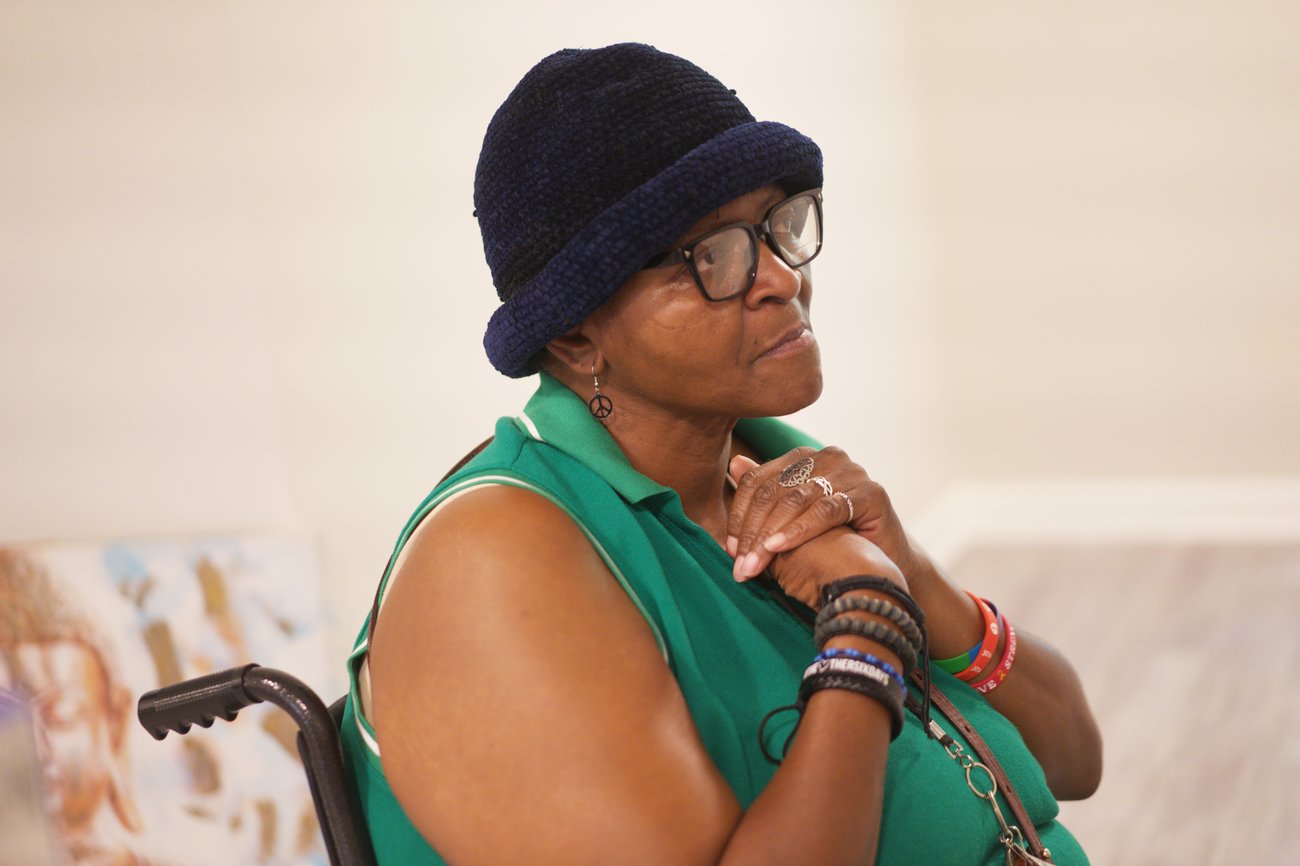
Lolita Griffeth sits in her new apartment in Buckhead, Atlanta, expressing gratitude for the space and everything in it. (ACPC/Jesse Pratt López) |
|
|
|
by Timothy Pratt
Lolita Griffeth sat in her wheelchair, looking over the living room and kitchen of her new apartment. At 57, it’s the first time she’s had her own place to live.
She circled the space with her eyes, taking in various stages of unpacking.
“It’s everybody’s stuff surrounding me,” she said. “I feel it.” She was talking about a painting of Buddha leaning against the wall, a coffee maker on the counter, some mugs that belonged to someone who used to live in the same homeless camp she did.
Everything came from someone else, supporters of Griffeth on her journey from a tent on Atlanta’s Old Wheat St. homeless camp to her new apartment in Buckhead.
They hadn’t just given her art for the walls and utensils for the kitchen, though. Before her recent move-in, she had gotten help with everything from dentures to sobriety.
Read more |
|
|
|
|
Pssst. We can't do this without you.
Become a monthly donor today. |
|
|
|
|
 |
|
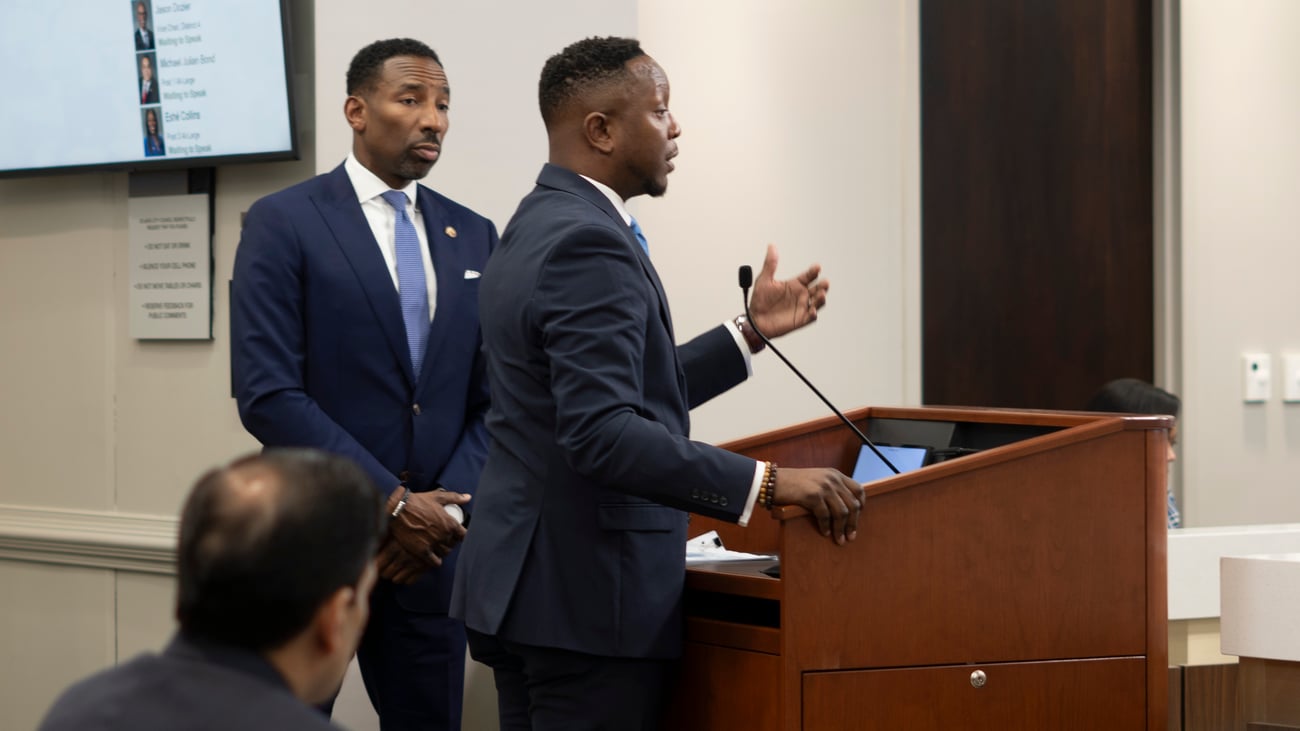
Atlanta Mayor Andre Dickens watches on while his chief of staff, Courtney English, discusses the administration's Neighborhood Reinvestment Initiative funding scheme to the Atlanta City Council Community Development and Human Services Committee at Atlanta City Hall on Tuesday, May 26, 2026. (ACPC/Matt Scott) |
WTF is a TAD and how does it support the neighborhood reinvestment initiative? |
|
At the heart of this is the question of money and funding. I'll do my best to limit the amount of numbers I throw at you, but it's still going to be quite a few. The administration also wants to create an NRI trust fund with a different funding mechanism. At the end of the newsletter, there's a link to reporting on the NRI Trust Fund from Atlanta Civic Circle.
The neighborhood reinvestment initiative needs $5.5 billion dollars.
There is no public project delivery list to add up to that dollar amount, but that's an issue for another day. The stated goal is to end the "tale of two cities" by addressing Atlanta's nation-leading income inequality through investment in infrastructure, affordable housing and ending food deserts in historically underserved neighborhoods.
Critics say TADs are not the
The administration thinks it can hit that $5.5 billion through extending tax allocation district expiration dates to 2056.
So, WTF is a TAD? The quick and dirty is: When TADs are created they lock in a base property tax level for the geographic area. Any monies above that base go to the TAD, ostensibly to improve the district and increase property values more, in turn increasing TAD revenues.
While the TAD is operating, the local governments—in this case the Atlanta, Fulton County and Atlanta Public Schools—lose out on that extra property tax revenue above the base.
In Atlanta, TAD funds are spent through Invest Atlanta, which is comprised of appointees from those three government bodies—and currently chaired by the mayor. TAD money can only be spent in the geographical limits of the TAD. That can mean TAD money can go to a development on one side of a street, but not the other.
How much money is generated by TADs? About $184 million this year, according to Andre Dickens chief of staff, Courtney English. Around two-thirds of that ($115 to $120 million) comes from the Beltline TAD, which, again, is not included in the extension plan. Perry Bolton generate about $13 million.
The administration believes TADs will grow by 5% annually and the six TADs in the NRI package will create $7.7 billion in TAD through 2056.
Julian Bené, a former Invest Atlanta board member, disagreed with that analysis.
"The administration is going around with delusional numbers," Bené said. "There I son way that you can generate $5 billion plus from an $86 million increment."
"If you go around promising you've got $5 billion to play with, you're lying to the public," he added.
Note: Fulton's Board of Commissioners and APS' Board of Education will each also vote on whether they want to participate in the extension. Dickens indicated that conversations with both bodies have gone well. |
|
|
 |
|
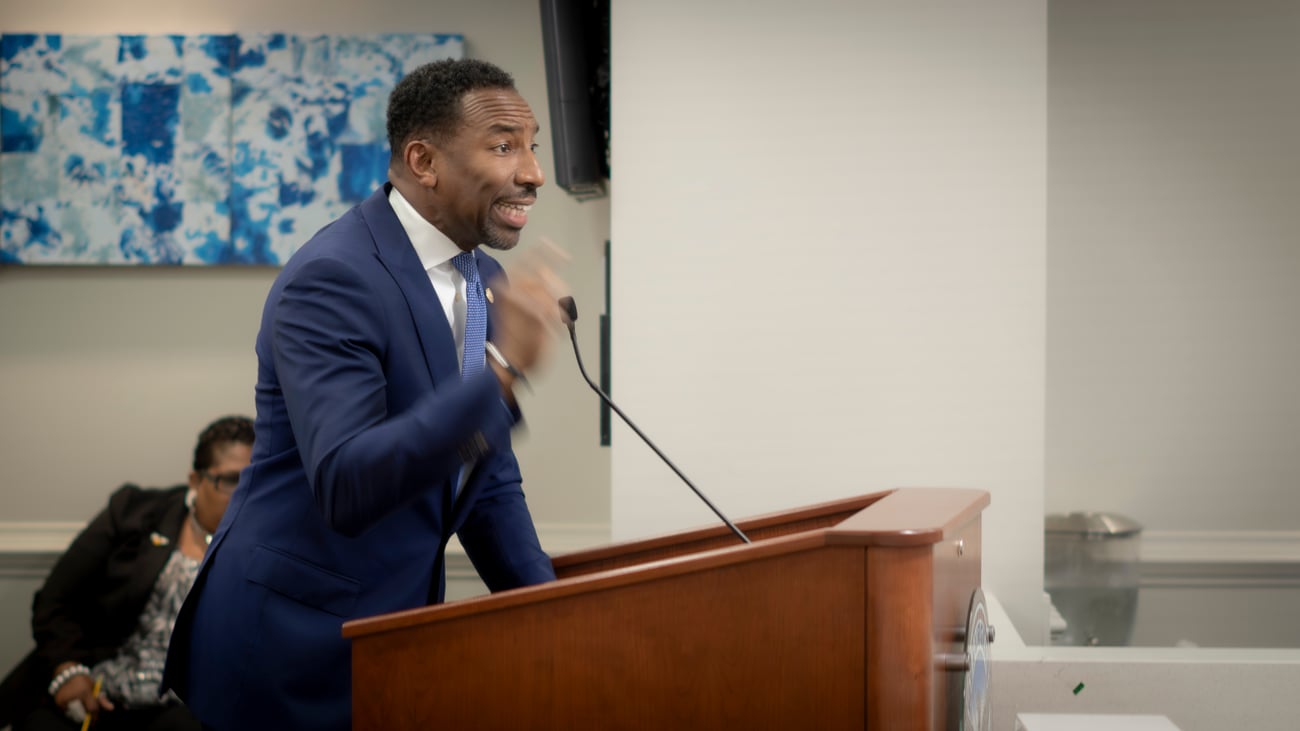
Atlanta Mayor Andre Dickens emphatically speaks about opponents to his neighborhood reinvestment initiative plan during a meeting of the Atlanta City Council Community Development and Human Services Committee at City Hall on Tuesday, May 26, 2026. (ACPC/Matt Scott) |
Dissent is (still) not welcome here |
|
I usually don't write opinion-esque pieces, but the after city of Atlanta posted a clip of this on Instagram—complete with emotional background music—I'll take it as fair game.
Dickens spent about 15 minutes speaking about the opposition to and opponents of his NRI plan. It began with some subtlety, but about halfway through, Dickens started calling out—without naming—his opponents. The dozen or so staffers he brought to the meeting clapped and cheered along.
Much of his ire was placed on two individuals opposed to the NRI. One who lived in a food desert until a Publix, supported by a TAD, opened up in his neighborhood. This, apparently, makes him someone who "lives above the line."
"This got to be said," Dickens continued several minutes later. "Because over the next two weeks they're gonna come out with everything they got, talking, trying to convince you that their lives above the live can tell you what to do below that line."
Dickens' second specific target was someone who spoke to one news station or another before the meeting:
"God also showed me when I was walking in here, a certain talker who loses elections often was talking to the media before the presentation. If you had something that you wanted to say, might not you want to be educated, hear the presentation, so you can comment on, so you can comment on it with knowledge, but because we love the camera, because we love the microphone, and we love the activists and activity of somebody telling you, 'go get them.'"
It's strongly reminiscent of the Cop City-era. This was likely the only public hearing on the NRI, and the administration wants to see this legislation approved mid-June.
Dickens' comments Tuesday weren't his first public attacks against those who question the NRI. Last year, the mayor took to the comment section on LinkedIn to question the bona fides of urban studies planner and housing advocate, Professor Dan Immergluck, who author of Red Hot City—a seminal text on gentrification and the wealth gap in Atlanta.
"Dan is out of touch would be one way to describe it," Dickens wrote. "Another way is that he is so arrogant that he thinks that he can comment on people and space he has no proximity nor history of support for. Classic gentrifier."
Still, Dickens says, the administration is open to feedback.
"We don't mind scrutiny, if it's going to make things better" Dickens closed his argument. "We just don't like wasting time, because lives depend on it."
Cop City era vibes indeed. |
|
|
|
Stories from our friends: |
|
|
|
|
|
|
|
|
|
|